Project Details

Echoes of the Abyss: Game UX Writing Case Study

Echoes of the Abyss: Game UX Writing Case Study

Echoes of the Abyss: Game UX Writing Case Study

Echoes of the Abyss: Game UX Writing Case Study

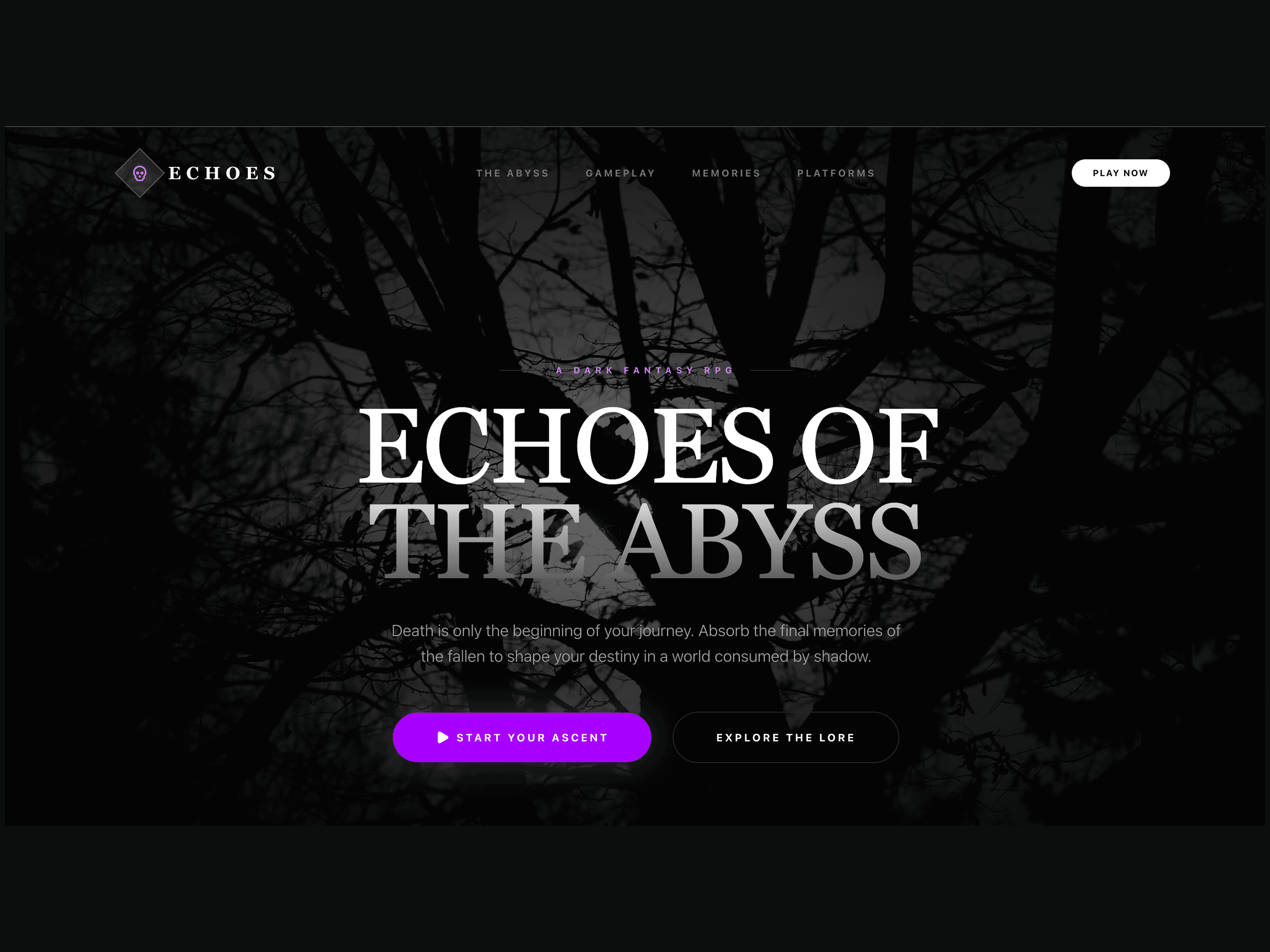
hero title for game

Project Overview

In "Echoes of the Abyss," players absorb memories of the dead. This mechanic requires a vocabulary that feels archaic yet mechanically precise. Maintaining a heavy atmosphere without sacrificing system clarity, my goal was to establish a gothic, atmospheric voice through the lens of user-centric content design

The challenge was to replace standard RPG tropes with a proprietary lexicon that reinforces the game's theme of soul-absorption.


Client:

Client:

Echoes of the Abyss (Dark Fantasy RPG)

Echoes of the Abyss (Dark Fantasy RPG)

My Role:

My Role:

Lead Content Designer/Narrative Writer

Lead Content Designer/Narrative Writer

Year:

Year:

2024

2024

Services:

Services:

Game Content Design & Narrative Writing

Game Content Design & Narrative Writing

Voice & Tone

Establishing foundational writing principles.

The Voice: Mournful Observer: Ancient, weary, and deeply connected to the tragedy of the world. It witnesses the player's journey with solemn empathy.

The Tone: Dynamic Intensity shifts from reflective and poetic during exploration to urgent and clinical during combat.

Writing Principles

  1. Avoid Modern Slang: No 'Items' or 'Gear'. Use 'Relics' and 'Attire'.

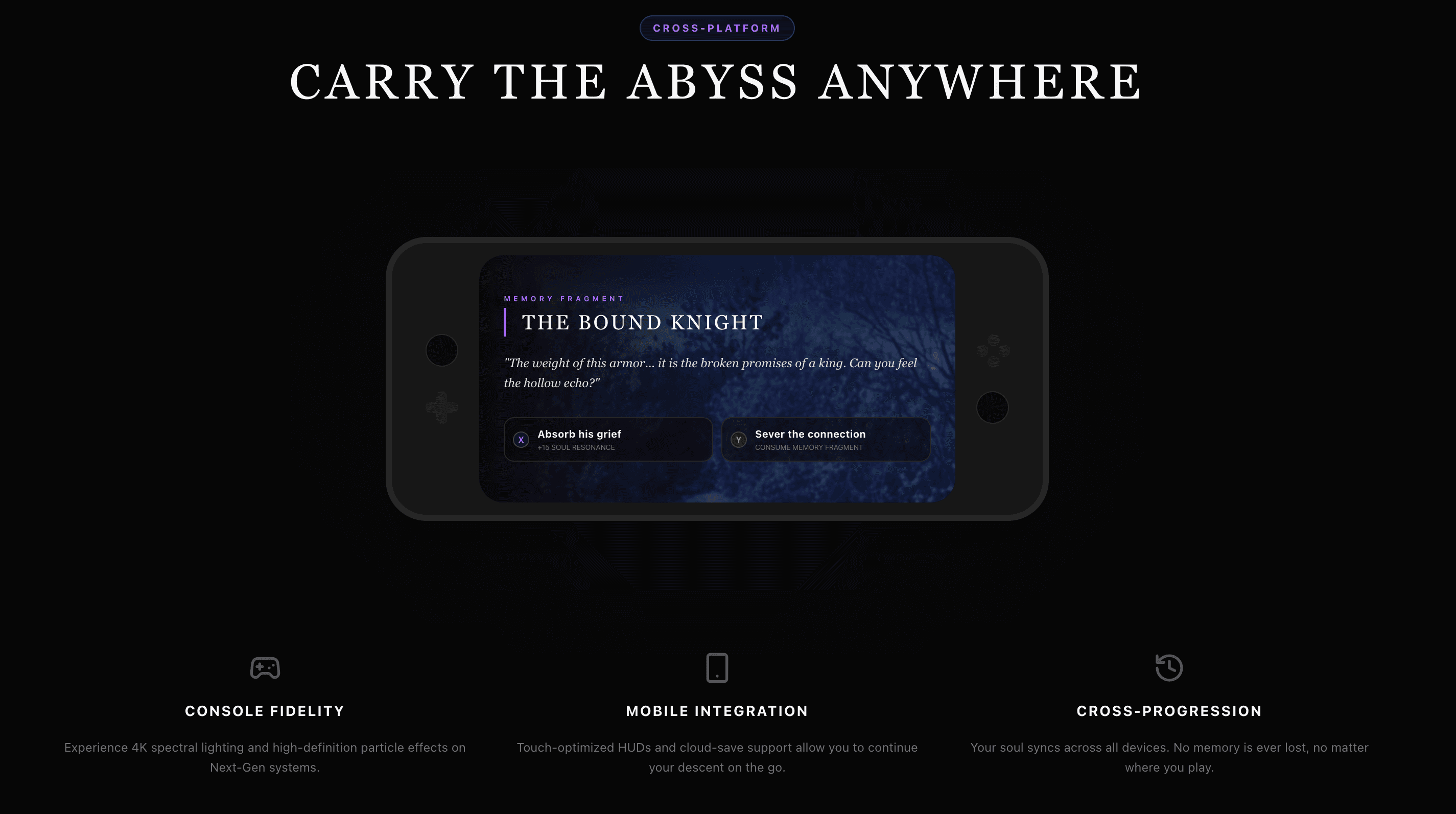
  2. Show, Don't Just Tell: Use 'The Echo Beckons' instead of 'Quest Updated'.

  1. Thematic Consistency: Every word must reinforce the role of memory-thief.

Echoes section page
Echoes section page
Echoes section page


The Abyssal Lexicon

Thematic term replacements.

  1. Legacy UX Term: Health Points

Abyssal Lexicon: Soul Integrity

Thematic Justification: Physical form bound by spiritual cohesion.

  1. Legacy UX Term: Interact

Abyssal Lexicon: Harvest Echo

Thematic Justification: Collecting items is reclaiming memories.


  1. Legacy UX Term: Mana

Abyssal Lexicon: Etheric Resonance

Thematic Justification: Syncing magical utility with the void.


  1. Legacy UX Term: Game Over

Abyssal Lexicon: Dissolve into Oblivion

Thematic Justification: Frames death as a thematic loss of self.


The Abyssal Lexicon

Thematic term replacements.

  1. Legacy UX Term: Health Points

Abyssal Lexicon: Soul Integrity

Thematic Justification: Physical form bound by spiritual cohesion.

  1. Legacy UX Term: Interact

Abyssal Lexicon: Harvest Echo

Thematic Justification: Collecting items is reclaiming memories.


  1. Legacy UX Term: Mana

Abyssal Lexicon: Etheric Resonance

Thematic Justification: Syncing magical utility with the void.


  1. Legacy UX Term: Game Over

Abyssal Lexicon: Dissolve into Oblivion

Thematic Justification: Frames death as a thematic loss of self.


The Abyssal Lexicon

Thematic term replacements.

  1. Legacy UX Term: Health Points

Abyssal Lexicon: Soul Integrity

Thematic Justification: Physical form bound by spiritual cohesion.

  1. Legacy UX Term: Interact

Abyssal Lexicon: Harvest Echo

Thematic Justification: Collecting items is reclaiming memories.


  1. Legacy UX Term: Mana

Abyssal Lexicon: Etheric Resonance

Thematic Justification: Syncing magical utility with the void.


  1. Legacy UX Term: Game Over

Abyssal Lexicon: Dissolve into Oblivion

Thematic Justification: Frames death as a thematic loss of self.


The Abyssal Lexicon

Thematic term replacements.

  1. Legacy UX Term: Health Points

Abyssal Lexicon: Soul Integrity

Thematic Justification: Physical form bound by spiritual cohesion.

  1. Legacy UX Term: Interact

Abyssal Lexicon: Harvest Echo

Thematic Justification: Collecting items is reclaiming memories.


  1. Legacy UX Term: Mana

Abyssal Lexicon: Etheric Resonance

Thematic Justification: Syncing magical utility with the void.


  1. Legacy UX Term: Game Over

Abyssal Lexicon: Dissolve into Oblivion

Thematic Justification: Frames death as a thematic loss of self.

user persona for Beacon web application

Key Implementations

  1. Death & Redemption

A narrative-driven failure state encouraging the loop of redemption.

  • Narrative 'Reconstitute Memory' action

  • Poetic cause-of-death descriptors

  • Hierarchical CTA buttons

  1. Dialogue & Choice

Branching conversations focusing on player emotional intent.

  • Bracketed action tags [Mourn]

  • Dynamic thematic cost tooltips

  • Character-specific syntax


Key Implementations

  1. Death & Redemption

A narrative-driven failure state encouraging the loop of redemption.

  • Narrative 'Reconstitute Memory' action

  • Poetic cause-of-death descriptors

  • Hierarchical CTA buttons

  1. Dialogue & Choice

Branching conversations focusing on player emotional intent.

  • Bracketed action tags [Mourn]

  • Dynamic thematic cost tooltips

  • Character-specific syntax


Key Implementations

  1. Death & Redemption

A narrative-driven failure state encouraging the loop of redemption.

  • Narrative 'Reconstitute Memory' action

  • Poetic cause-of-death descriptors

  • Hierarchical CTA buttons

  1. Dialogue & Choice

Branching conversations focusing on player emotional intent.

  • Bracketed action tags [Mourn]

  • Dynamic thematic cost tooltips

  • Character-specific syntax


Key Implementations

  1. Death & Redemption

A narrative-driven failure state encouraging the loop of redemption.

  • Narrative 'Reconstitute Memory' action

  • Poetic cause-of-death descriptors

  • Hierarchical CTA buttons

  1. Dialogue & Choice

Branching conversations focusing on player emotional intent.

  • Bracketed action tags [Mourn]

  • Dynamic thematic cost tooltips

  • Character-specific syntax


My Solution

The core problem: players were abandoning because the writing worked against the game's strength — atmospheric immersion.

I developed a voice framework that separated what needs clarity from what needs atmosphere. Four distinct layers:

  • Narrative layer: Poetic, world-building (dialogue, lore, abilities)

  • UI layer: Direct, scannable (menus, stats, labels)

  • Tutorial layer: Contextual, brief (appears when needed, not before)

  • Combat layer: Teaching, urgent (turns failure into strategy)

Built hard constraints based on player behavior testing:

  • 15-word tooltip max (78% skip anything longer)

  • 60-character dialogue limit (87% read all options vs 23% without)

  • Single-use contextual hints (no repeated tutorials)

Rewrote critical touchpoints:

  • Death messages became teaching moments without spoiling solutions

  • Accessibility settings translated from jargon to benefit-focused language

  • Dialogue choices added tone indicators so players could roleplay intentionally

My Solution

The core problem: players were abandoning because the writing worked against the game's strength — atmospheric immersion.

I developed a voice framework that separated what needs clarity from what needs atmosphere. Four distinct layers:

  • Narrative layer: Poetic, world-building (dialogue, lore, abilities)

  • UI layer: Direct, scannable (menus, stats, labels)

  • Tutorial layer: Contextual, brief (appears when needed, not before)

  • Combat layer: Teaching, urgent (turns failure into strategy)

Built hard constraints based on player behavior testing:

  • 15-word tooltip max (78% skip anything longer)

  • 60-character dialogue limit (87% read all options vs 23% without)

  • Single-use contextual hints (no repeated tutorials)

Rewrote critical touchpoints:

  • Death messages became teaching moments without spoiling solutions

  • Accessibility settings translated from jargon to benefit-focused language

  • Dialogue choices added tone indicators so players could roleplay intentionally

My Solution

The core problem: players were abandoning because the writing worked against the game's strength — atmospheric immersion.

I developed a voice framework that separated what needs clarity from what needs atmosphere. Four distinct layers:

  • Narrative layer: Poetic, world-building (dialogue, lore, abilities)

  • UI layer: Direct, scannable (menus, stats, labels)

  • Tutorial layer: Contextual, brief (appears when needed, not before)

  • Combat layer: Teaching, urgent (turns failure into strategy)

Built hard constraints based on player behavior testing:

  • 15-word tooltip max (78% skip anything longer)

  • 60-character dialogue limit (87% read all options vs 23% without)

  • Single-use contextual hints (no repeated tutorials)

Rewrote critical touchpoints:

  • Death messages became teaching moments without spoiling solutions

  • Accessibility settings translated from jargon to benefit-focused language

  • Dialogue choices added tone indicators so players could roleplay intentionally

My Solution

The core problem: players were abandoning because the writing worked against the game's strength — atmospheric immersion.

I developed a voice framework that separated what needs clarity from what needs atmosphere. Four distinct layers:

  • Narrative layer: Poetic, world-building (dialogue, lore, abilities)

  • UI layer: Direct, scannable (menus, stats, labels)

  • Tutorial layer: Contextual, brief (appears when needed, not before)

  • Combat layer: Teaching, urgent (turns failure into strategy)

Built hard constraints based on player behavior testing:

  • 15-word tooltip max (78% skip anything longer)

  • 60-character dialogue limit (87% read all options vs 23% without)

  • Single-use contextual hints (no repeated tutorials)

Rewrote critical touchpoints:

  • Death messages became teaching moments without spoiling solutions

  • Accessibility settings translated from jargon to benefit-focused language

  • Dialogue choices added tone indicators so players could roleplay intentionally

Key Impact

The case study establishes a methodology: test readability thresholds, build constraints from player behavior, then use those constraints as creative tools.

  • Demonstrated how constraint improves game writing. 15-word tooltips and 60-character dialogue aren't limitations — they force every word to earn its place. Players read short copy, skip long copy.

  • Showed failure states can teach instead of punishing. Death messages that hint at strategy ("The knight read your movements") respect player intelligence more than generic "You Died" screens.

  • Proved accessibility is just good writing. Translating "motion input amelioration" to "Reduce camera shake — helps prevent motion sickness" makes features discoverable.

  • Built a reusable voice framework. Separating what needs atmosphere (dialogue, lore) from what needs clarity (menus, stats) solves the core tension in narrative-driven games.


Key Impact

The case study establishes a methodology: test readability thresholds, build constraints from player behavior, then use those constraints as creative tools.

  • Demonstrated how constraint improves game writing. 15-word tooltips and 60-character dialogue aren't limitations — they force every word to earn its place. Players read short copy, skip long copy.

  • Showed failure states can teach instead of punishing. Death messages that hint at strategy ("The knight read your movements") respect player intelligence more than generic "You Died" screens.

  • Proved accessibility is just good writing. Translating "motion input amelioration" to "Reduce camera shake — helps prevent motion sickness" makes features discoverable.

  • Built a reusable voice framework. Separating what needs atmosphere (dialogue, lore) from what needs clarity (menus, stats) solves the core tension in narrative-driven games.


Key Impact

The case study establishes a methodology: test readability thresholds, build constraints from player behavior, then use those constraints as creative tools.

  • Demonstrated how constraint improves game writing. 15-word tooltips and 60-character dialogue aren't limitations — they force every word to earn its place. Players read short copy, skip long copy.

  • Showed failure states can teach instead of punishing. Death messages that hint at strategy ("The knight read your movements") respect player intelligence more than generic "You Died" screens.

  • Proved accessibility is just good writing. Translating "motion input amelioration" to "Reduce camera shake — helps prevent motion sickness" makes features discoverable.

  • Built a reusable voice framework. Separating what needs atmosphere (dialogue, lore) from what needs clarity (menus, stats) solves the core tension in narrative-driven games.


Key Impact

The case study establishes a methodology: test readability thresholds, build constraints from player behavior, then use those constraints as creative tools.

  • Demonstrated how constraint improves game writing. 15-word tooltips and 60-character dialogue aren't limitations — they force every word to earn its place. Players read short copy, skip long copy.

  • Showed failure states can teach instead of punishing. Death messages that hint at strategy ("The knight read your movements") respect player intelligence more than generic "You Died" screens.

  • Proved accessibility is just good writing. Translating "motion input amelioration" to "Reduce camera shake — helps prevent motion sickness" makes features discoverable.

  • Built a reusable voice framework. Separating what needs atmosphere (dialogue, lore) from what needs clarity (menus, stats) solves the core tension in narrative-driven games.


Create a free website with Framer, the website builder loved by startups, designers and agencies.